Introduction
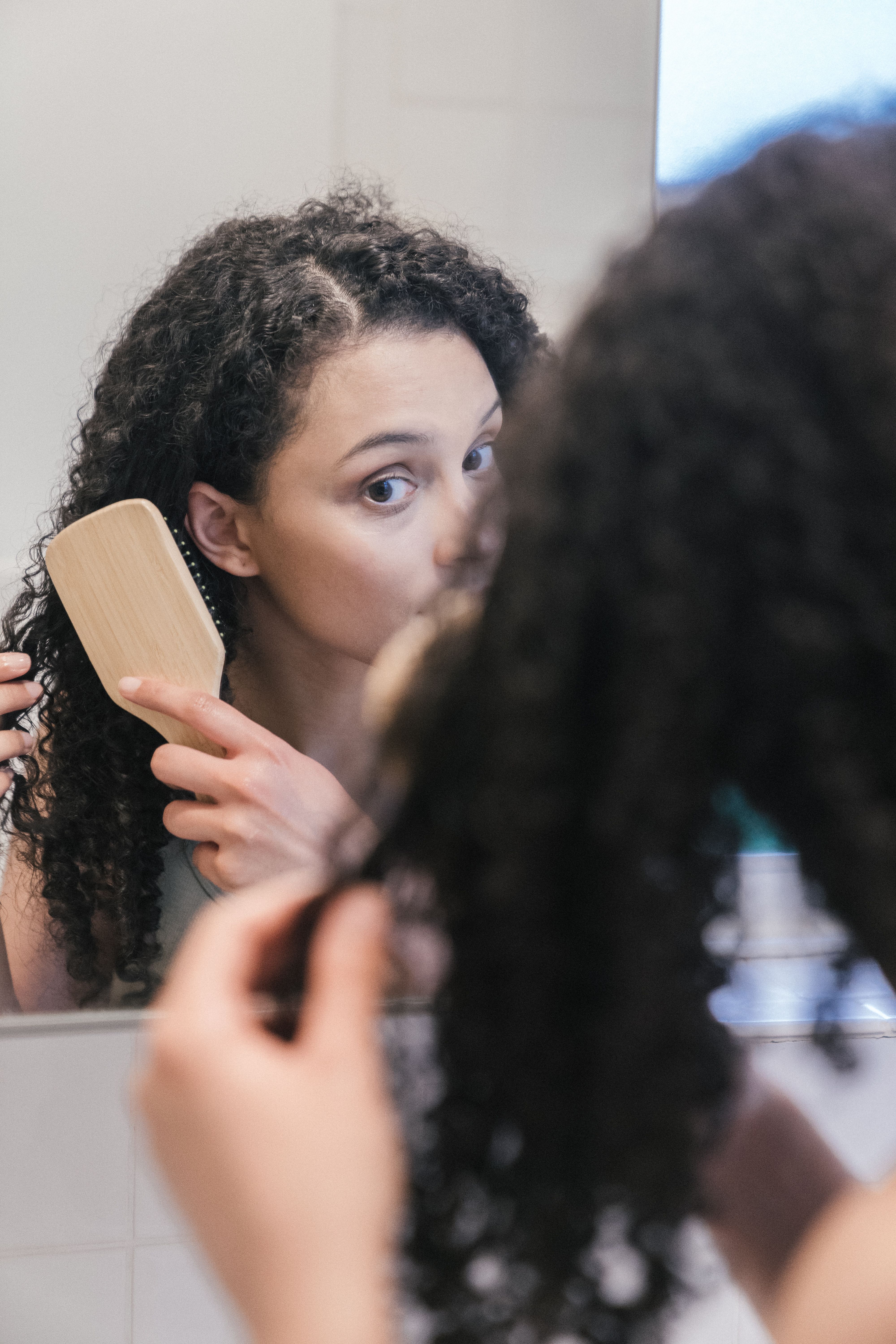
Hair brushing is an important part of routine hair care, but incorrect brushing techniques, excessive friction and frequent heat styling can damage the hair shaft and contribute to breakage.
The hair shaft is composed primarily of keratin, a structural protein protected by an outer layer called the cuticle. Repeated mechanical stress and excessive heat can disrupt this protective layer, making the hair more vulnerable to roughness, splitting and breakage.
Understanding common hair-care mistakes can help preserve hair-shaft integrity and reduce avoidable damage.
1. Brushing Wet Hair Incorrectly
Wet hair can be more susceptible to mechanical damage because its physical properties change when it absorbs water. Forceful brushing can therefore increase the risk of stretching, tangling and breakage.
However, the best detangling method depends on hair texture.
People with straight hair may benefit from allowing their hair to dry partially before gently detangling it with a suitable comb. People with tightly curled or textured hair may benefit from detangling while the hair is damp, often with conditioner, to improve lubrication and reduce breakage.
The key is not to avoid all wet-hair combing, but to detangle gently using a method suited to your hair type.
2. Brushing the Hair Excessively
The traditional advice to brush hair 100 strokes every day has no established scientific basis as a method for promoting hair growth.
Excessive brushing can increase friction between hair fibres and the brush. Repeated mechanical stress may damage the cuticle and contribute to split ends, medically termed trichoptilosis.
Brushing does not reverse follicular miniaturisation or stimulate new hair growth simply by increasing the number of strokes.
Brush only as often as necessary to detangle and style the hair.
3. Pulling the Brush Forcefully Through Tangles
Forcefully pulling a brush through tangled hair places considerable mechanical stress on the hair shaft.
When knots resist movement, excessive pulling can cause individual fibres to snap, producing hair breakage.
A gentler approach is to begin detangling at the ends and gradually work upwards towards the roots. This allows knots to be released progressively rather than forcing the entire length of hair through a tangled section.
Using a suitable detangling product may also reduce friction.
4. Rubbing Wet Hair Vigorously With a Towel
Vigorous towel rubbing can increase friction between wet hair fibres and the towel surface.
Repeated friction may roughen the cuticle and contribute to tangling and breakage, particularly in fragile, chemically treated or already damaged hair.
Instead, gently press or wrap the hair in a soft towel or microfibre towel to absorb excess moisture. Allowing the hair to air-dry when practical can also reduce mechanical stress.
5. Using a Hair Straightener on Wet Hair
Conventional flat irons are designed to be used on completely dry hair, unless the appliance is specifically designed and approved for wet-to-dry use.
Applying intense heat to wet hair can cause rapid water vaporisation within and around the hair fibre. This may produce structural damage, including damage associated with rapid heating of internal moisture, and can increase the risk of hair-shaft breakage.
Hair may appear smooth immediately after straightening, but that cosmetic effect does not indicate that the hair structure remains undamaged.
Always follow the appliance manufacturer’s instructions and avoid using a conventional flat iron on wet or damp hair.
6. Using Heat-Styling Tools Too Frequently
Frequent blow-drying, curling and straightening at high temperatures can progressively damage the hair cuticle and weaken the hair shaft.
Excessive heat exposure may contribute to:
• Cuticle disruption
• Increased hair roughness
• Loss of flexibility
• Increased susceptibility to breakage
• Split ends
To minimise damage, allow hair to air-dry when possible, use the lowest effective heat setting, keep hot tools moving and reduce the frequency of heat styling.
Heat-protectant products may help reduce some forms of damage, but they do not eliminate the risk of excessive heat exposure.
7. Brushing Forcefully After Applying Strong-Hold Styling Products
Some strong-hold styling products make hair fibres feel stiff or hold them in a fixed arrangement.
Forcefully brushing hair after these products have dried can increase friction and mechanical stress, particularly when the hair is already tangled.
Follow the product instructions and avoid aggressive detangling. If necessary, loosen the style gently before combing through the hair.
The concern is not that every styling product damages hair, but that forceful manipulation of stiff or tangled fibres can increase breakage.
8. Wearing Tight Hairstyles Repeatedly
Tight ponytails, braids, cornrows, buns and hair extensions can place sustained tension on the hair follicles.
Repeated or prolonged traction may cause traction alopecia, a form of hair loss associated with mechanical pulling on the follicles.
Early signs may include tenderness, scalp discomfort, broken hairs and thinning around the hairline. If the traction continues, chronic inflammation and follicular damage can result in permanent hair loss.
Choose comfortable hairstyles that do not pull tightly on the scalp, vary hairstyles when possible and take persistent pain or hairline thinning seriously.
9. Using a Dirty Comb or Hairbrush
Combs and brushes can accumulate shed hair, sebum, dead skin cells, dust and styling-product residue.
Although ordinary brush residue does not automatically indicate infection, accumulated debris can be transferred back onto the hair and scalp.
Regularly remove trapped hair and clean combs and brushes according to their material and the manufacturer’s instructions. Allow them to dry thoroughly before use.
Good tool hygiene is particularly important when brushes are shared or when a person has a scalp condition that requires specific hygiene precautions.
10. Using Damaged or Unsuitable Hairbrushes
Brushes with broken bristles, rough edges or designs that repeatedly snag the hair can increase friction and mechanical stress.
The most suitable brush depends on hair length, thickness, curl pattern and the purpose of brushing.
A wide-tooth comb may be useful for gently detangling wet or curly hair, while other brush designs may be more appropriate for styling dry hair.
Replace brushes that repeatedly snag, pull or scratch the scalp.
Scientific Conclusion
Hair-shaft damage is often the result of repeated mechanical stress, excessive heat exposure and inappropriate grooming practices. Although brushing is a normal part of hair care, more brushing does not necessarily mean healthier hair.
Gentle detangling, suitable brushes, reduced heat exposure, careful towel-drying and avoidance of sustained traction can help minimise preventable hair breakage.
It is also important to distinguish hair breakage from hair loss originating at the follicle. Persistent thinning or excessive shedding may be associated with androgenetic alopecia, telogen effluvium, nutritional deficiencies, thyroid disorders, inflammatory scalp conditions or other medical causes.
Therefore, good hair care can protect the hair shaft, but persistent hair loss requires appropriate assessment rather than simply changing brushing habits.
Literature References
1. Hair Styling Without Damage – American Academy of Dermatology (AAD).
2. Tips for Healthy Hair – American Academy of Dermatology (AAD).
3. Hairbrushes: A Guide for Dermatologists – Skin Appendage Disorders, 2025.