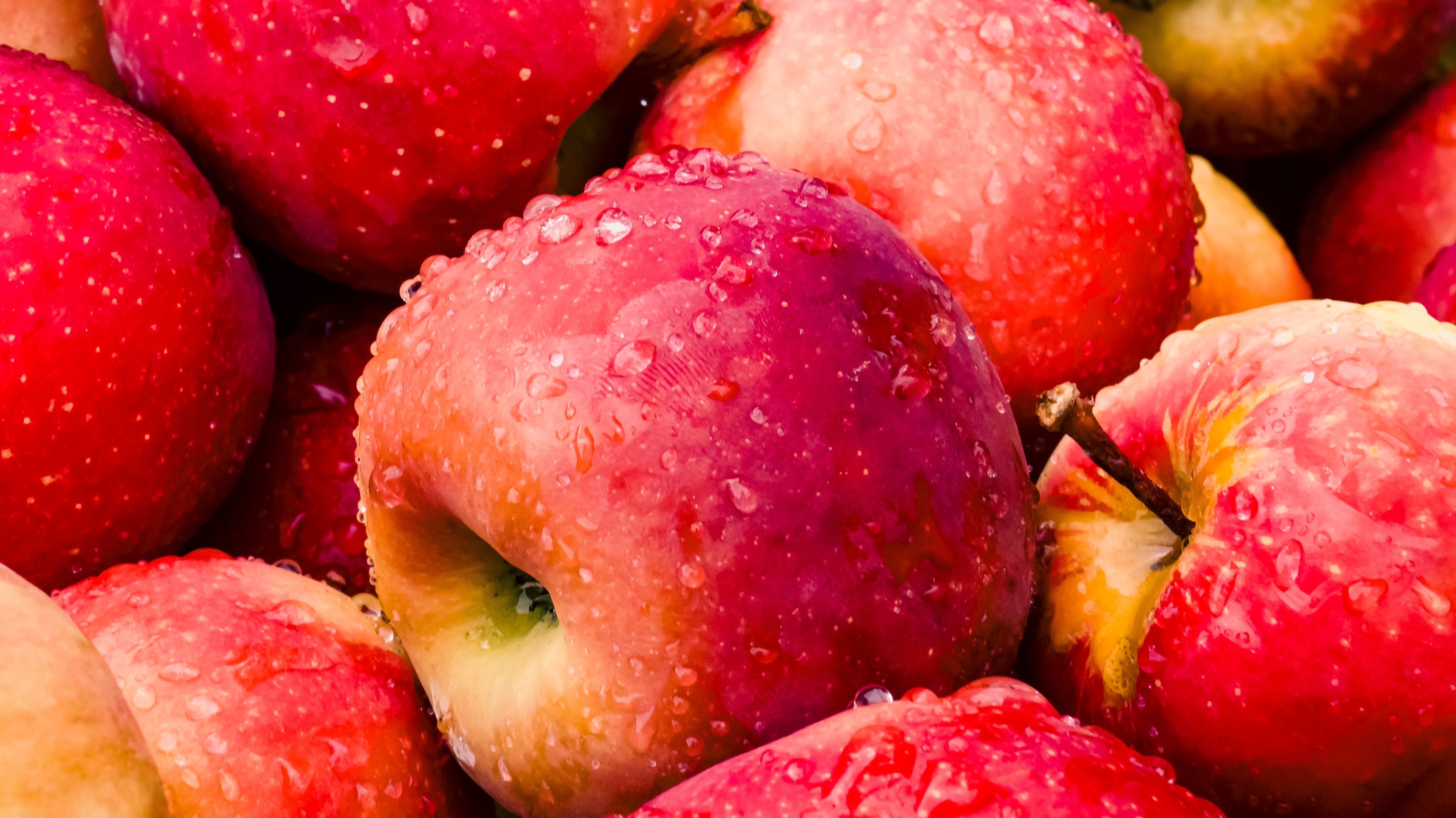
Scientific Description
Apples (Malus domestica) contain dietary fibre, vitamins and various bioactive plant compounds that contribute to their nutritional value. The peel generally contains higher concentrations of several polyphenols and flavonoids than the flesh, including quercetin and its derivatives. Red-skinned apple varieties may also contain anthocyanins, pigments responsible for their red coloration. These compounds exhibit antioxidant activity in laboratory studies, but such activity does not necessarily establish specific clinical benefits in humans. Apple skin contributes dietary fibre, while pectin, a soluble dietary fibre, is distributed throughout the fruit. Dietary fibre supports normal bowel function and may contribute to better post-meal blood glucose regulation as part of a balanced diet. Consuming whole apples with their skin is therefore a practical way to obtain fibre and a range of naturally occurring bioactive compounds.
Apples naturally develop a waxy cuticle on their outer surface. This protective layer helps reduce water loss and provides a barrier against environmental stress. In commercial supply chains, some apples may also receive additional food-grade coatings to help maintain freshness, appearance and storage quality. These coatings may contain different materials depending on the formulation and applicable food regulations. Carnauba wax is obtained from the leaves of the carnauba palm (Copernicia prunifera), whereas beeswax is produced by honeybees. Shellac, which is used in certain food-coating applications, is derived from resinous secretions of the lac insect. Therefore, not all edible fruit coatings are plant-derived. Research on edible coatings indicates that suitable formulations can reduce moisture loss, regulate gas exchange and help preserve the post-harvest quality of fruits and vegetables. Their performance depends on the coating composition, application method and storage conditions.
The safety of food-grade coatings must be distinguished from the safety of unidentified, unauthorised or contaminated surface materials. Regulatory assessments evaluate particular substances under specified conditions of use; they do not establish that every coating is harmless regardless of its composition, purity or application. The European Food Safety Authority assessed carnauba wax (E 903) for use as a food additive, while the Joint FAO/WHO Expert Committee on Food Additives evaluated beeswax (INS 901). In India, food regulations permit certain specified wax coatings, including beeswax, carnauba wax and shellac, subject to applicable requirements, including relevant labelling provisions. These permissions apply to regulated food-grade materials and their permitted uses, not to arbitrary coatings.
Consumers should wash apples thoroughly under clean, running water before eating them. Washing helps remove dirt and some surface residues, but it cannot guarantee complete removal of wax coatings or pesticide residues. Soap, detergent and household cleaning chemicals should not be used to wash fruit. For most consumers, there is no general need to discard apple skin solely because an apple may have an authorised food-grade coating. Eating thoroughly washed whole apples with their skin provides dietary fibre and naturally occurring plant compounds. Individuals who prefer peeled apples can still obtain valuable nutrients from the flesh, although peeling generally reduces the amount of fibre and some peel-enriched bioactive compounds consumed.
LITERATURE REFERENCES
1. Apple Peel Supplementation Potential in Metabolic Syndrome Prevention – Life (2023).
2. Technical Evaluation Report: Carnauba Wax—Handling/Processing – United States Department of Agriculture, National Organic Program (2014).
3. Importance of Edible Wax Coatings in Fruits and Vegetables – Indian Farmer (2020).
4. Application of Plant Waxes in Edible Coatings – Coatings (2023).
5. Scientific Opinion on the Re-evaluation of Carnauba Wax (E 903) as a Food Additive – EFSA Journal (2012).