Introduction
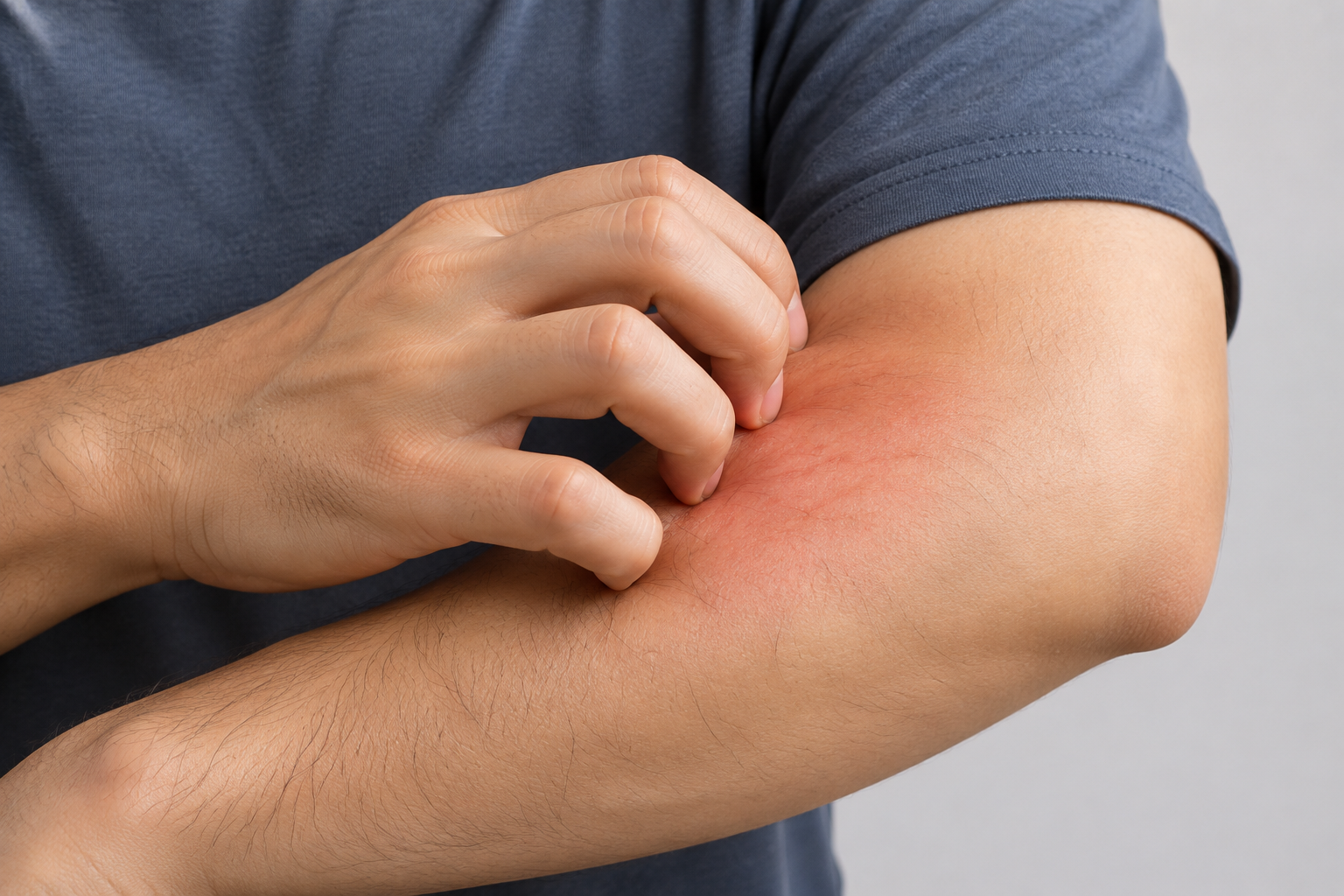
Itching, medically termed pruritus, is one of the most common symptoms encountered in clinical practice. Although fungal infections are an important cause of itching, they represent only one category among numerous dermatological, infectious, allergic, neurological and systemic conditions. Despite this, consumers may develop the misconception that any itchy skin condition can be managed with an antifungal cream. This raises an important question about the appropriate use of products such as Itch Guard, which contains terbinafine in certain formulations. Understanding the underlying cause of itching is essential because the treatment that is effective for a fungal infection may be ineffective for eczema, psoriasis, allergic dermatitis, scabies or other unrelated conditions.
What Causes Itching? Understanding Its Multifactorial Nature
According to the American Academy of Dermatology (AAD), itching can arise from numerous causes, including dry skin, insect bites, eczema, hives, psoriasis, ringworm, scabies, medication reactions, nerve disorders and diseases affecting internal organs. Some patients experience itching even without a visible skin rash.
The major causes include:
1. Fungal infections: Dermatophytes can cause tinea corporis, tinea cruris and tinea pedis, producing characteristic combinations of itching, redness and scaling. Appropriate antifungal treatment can eliminate susceptible fungal infections.
2. Eczema and contact dermatitis: Atopic dermatitis and irritant or allergic contact dermatitis cause inflammation and itching through skin-barrier dysfunction and immune-mediated mechanisms. Exposure to soaps, detergents, fragrances, cosmetics and other irritants or allergens may trigger symptoms.
3. Psoriasis: This chronic inflammatory skin disease can produce erythematous plaques with scaling and varying degrees of itching. Antifungal therapy does not treat the underlying psoriatic inflammation.
4. Scabies and insect-related conditions: Scabies is caused by infestation with the mite Sarcoptes scabiei. Mosquitoes, bedbugs and other arthropods can also produce itchy inflammatory reactions. These conditions require cause-specific management.
5. Dry skin and heat rash: Reduced skin hydration can impair the epidermal barrier and produce itching. Heat rash develops when sweat ducts become obstructed, resulting in small inflammatory lesions.
6. Systemic and neurological causes: Chronic kidney disease, cholestatic liver disease, thyroid disorders, diabetes, certain blood disorders and medication reactions can be associated with itching. Neuropathic pruritus may arise from abnormal nerve function and can occur without a primary skin rash.
These different causes demonstrate why itching should not automatically be interpreted as evidence of a fungal infection.
What Is Terbinafine, and What Is Its Actual Role?
Terbinafine hydrochloride is an allylamine antifungal agent. It inhibits the fungal enzyme squalene epoxidase, interfering with ergosterol synthesis and promoting the accumulation of intracellular squalene in susceptible fungi. Topical terbinafine is principally used for susceptible superficial fungal infections, particularly dermatophyte infections.
Itch Guard is a brand associated with antifungal preparations. The exact ingredients and indications should be checked on the specific formulation because different variants may contain different components.
The important pharmacological distinction is that terbinafine treats susceptible fungal organisms. It does not directly treat the underlying mechanisms of eczema, psoriasis, allergic contact dermatitis, scabies or systemic pruritus.
Consequently, the presence of itching alone is not sufficient justification for selecting terbinafine.
Can an Antifungal Cream Be Used for Every Type of Itching?
No. The appropriate treatment depends on the underlying diagnosis.
For example, a patient with tinea cruris may benefit from topical antifungal therapy. In contrast, a patient with allergic contact dermatitis may require identification and avoidance of the allergen, together with appropriate anti-inflammatory treatment. A patient with scabies requires specific anti-mite therapy, while itching caused by dry skin may improve with regular moisturisation.
Using an antifungal cream for a non-fungal condition may provide no meaningful therapeutic benefit. Repeatedly relying on an ineffective treatment may delay diagnosis and allow the actual condition to persist. Topical antifungals can also cause local adverse reactions, including irritation or contact dermatitis, in some individuals.
However, terbinafine does not inevitably worsen every non-fungal skin condition. The principal concern is inappropriate treatment, unnecessary exposure and delayed access to the correct therapy.
Does the Name Itch Guard Mean That It Treats Every Itchy Condition?
A product’s brand name should not be confused with its pharmacological indication. Although the name Itch Guard may suggest a broad anti-itch purpose to consumers, the actual therapeutic role depends on the product’s ingredients, approved indications and substantiated advertising claims.
The scientific question is therefore whether consumers could misunderstand the intended use of a particular formulation and assume that it is suitable for every cause of itching.
Any assessment of misleading advertising should examine the exact wording, the product’s approved labelling and the evidence supporting the claim. A brand name alone does not establish a regulatory violation, and the therapeutic limitations of an antifungal ingredient should not be used to infer that every advertisement for the product is unlawful.
Nevertheless, public awareness is important. Consumers should understand that symptom relief and treatment of the underlying disease are not necessarily the same thing.
What Does the American Academy of Dermatology Say?
The American Academy of Dermatology explains that persistent itching may arise from a wide range of skin conditions and, in some cases, diseases affecting internal organs or the nervous system. Its guidance emphasises identifying the underlying cause and seeking dermatological assessment when the source of itching is unclear or symptoms persist.
This supports a fundamental principle of clinical practice: the cause of itching should guide the treatment, rather than the symptom alone.
Official reference: American Academy of Dermatology. 10 Reasons Your Skin Itches Uncontrollably and How to Get Relief. Available at: https://www.aad.org/public/everyday-care/itchy-skin/itch-relief/relieve-uncontrollably-itchy-skin
Conclusion: Diagnose Before Treating
Itching is a multifactorial clinical symptom with infectious, inflammatory, allergic, neurological and systemic causes. Terbinafine is a useful antifungal agent for susceptible fungal infections, but it is not a universal treatment for every itchy skin condition.
The indiscriminate use of antifungal creams can lead to ineffective treatment, unnecessary medication exposure and delays in identifying the actual cause of symptoms. Consumers should avoid assuming that every itch is fungal, while healthcare professionals should select treatment according to the clinical findings and, when necessary, appropriate diagnostic investigations.
The broader message is not that Itch Guard has no legitimate use, but that its antifungal role should be understood correctly. Responsible medicine use requires accurate diagnosis, evidence-based treatment and clear communication about a product’s intended purpose.
Medical Awareness Message: Itching is a symptom, not a diagnosis. Identify the cause before choosing the treatment.
Literature Reference:
1. American Academy of Dermatology (AAD). 10 Reasons Your Skin Itches Uncontrollably and How to Get Relief.